Skip to content
Roof installation is one of the biggest home improvement projects you’ll ever invest in.
But while this can make some homeowners nervous, we find that customers who’re familiar with the process and understand what each step entails feel much more comfortable throughout all phases of the project. It also helps to set accurate expectations and give you and your family the chance to prepare.
So, we’ve put together the following guide, which will outline the basic steps involved in the entire roof installation process. Shingle roof installation differs quite a bit from metal roof installation, so we’ll discuss each one separately.
The Shingle Roof Installation Process
Shingles are the common type of roof covering used in Ohio(and many other parts of the U.S.), as they offer a great combination of durability, affordability, and aesthetic charm. And while every roof is slightly different and there will be minor differences between each installation project, the basic shingle installation process typically involves the following steps:
- Our crew arrives between 6:00 and 7:00 AM on the scheduled day (weather permitting). However, during the colder months, they may arrive later in the morning to account for the later sunrise.
- We begin preparing the job site. Protective tarps are placed around your landscaping to prevent any damage that may occur during the project.
- We remove the existing roofing materials. All of the old shingles, metal, underlayment, and drip edge materials are torn off to expose the roof decking. If the decking is damaged or rotting, we’ll notify you and discuss your options.
- We install drip edge flashing along the eaves. Drip edge flashing is used to help to protect the edges of your roof, direct water into the gutters, and prevent the edges from rotting.
- We apply a waterproof ice and water shield in the areas most prone to leaks. This includes the eaves (usually 2 to 3 feet past the exterior walls), roof valleys, and around chimneys, vents, and pipe boots.
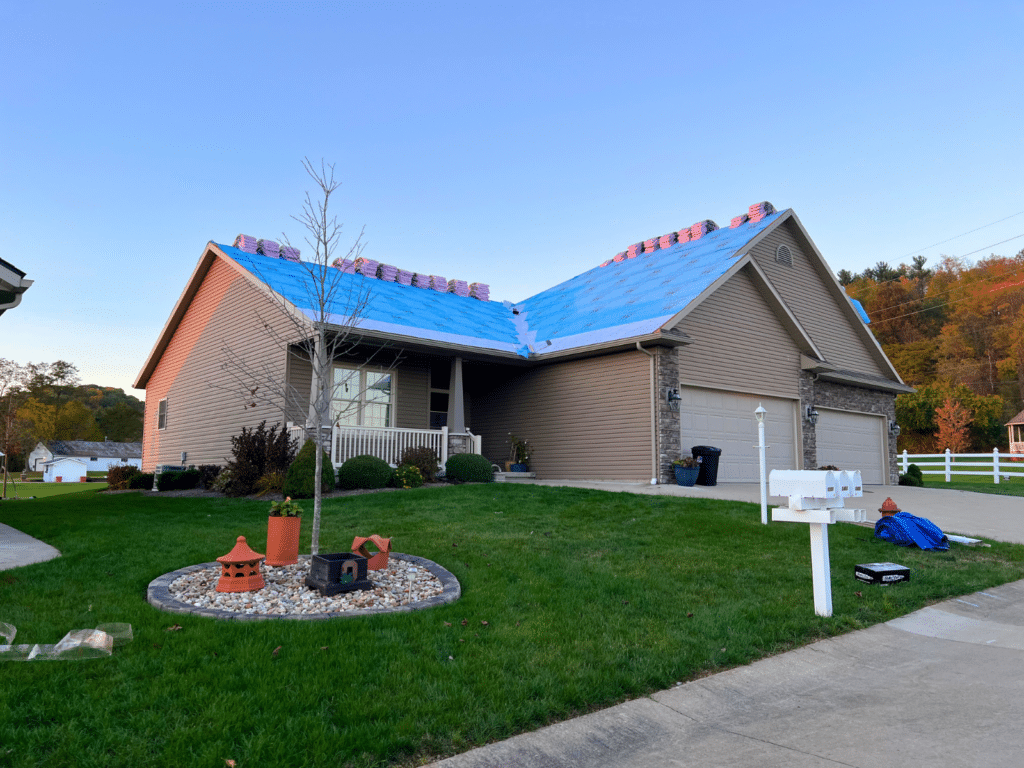
- We cover the rest of the roof deck with underlayment to create an added moisture barrier. The underlayment will overlap and be properly secured to protect your home from rain, snow, and humidity.
- We install drip edge flashing at the rakes. Once the underlayment has been installed, we can add drip edge flashing to the rakes.
- We install starter shingles along the eaves and rakes. Starter shingles are essential for preventing wind uplift and helping the first course of main shingles seal correctly. By starting at the eaves and rakes, we can ensure proper sealing and wind resistance.
- We lay the main shingles in a staggered pattern starting at the eaves and working upward. Following manufacturer guidelines, each shingle is nailed in place using 4 to 6 nails to ensure proper alignment and water runoff.
- We install flashing and trim around vulnerable roof features. This includes chimneys, skylights, and roof-to-wall transitions, all of which need extra protection against water infiltration.
- We use pipe and zip boots to seal all vents and pipes that pass through the roof. These specialized components help prevent leaks and maintain a watertight barrier.
- We install the ideal ventilation system for your home’s roof and attic structure. Some of the most common roof vent options include ridge vents, soffit vents, gable vents, turbine vents, and powered vents.
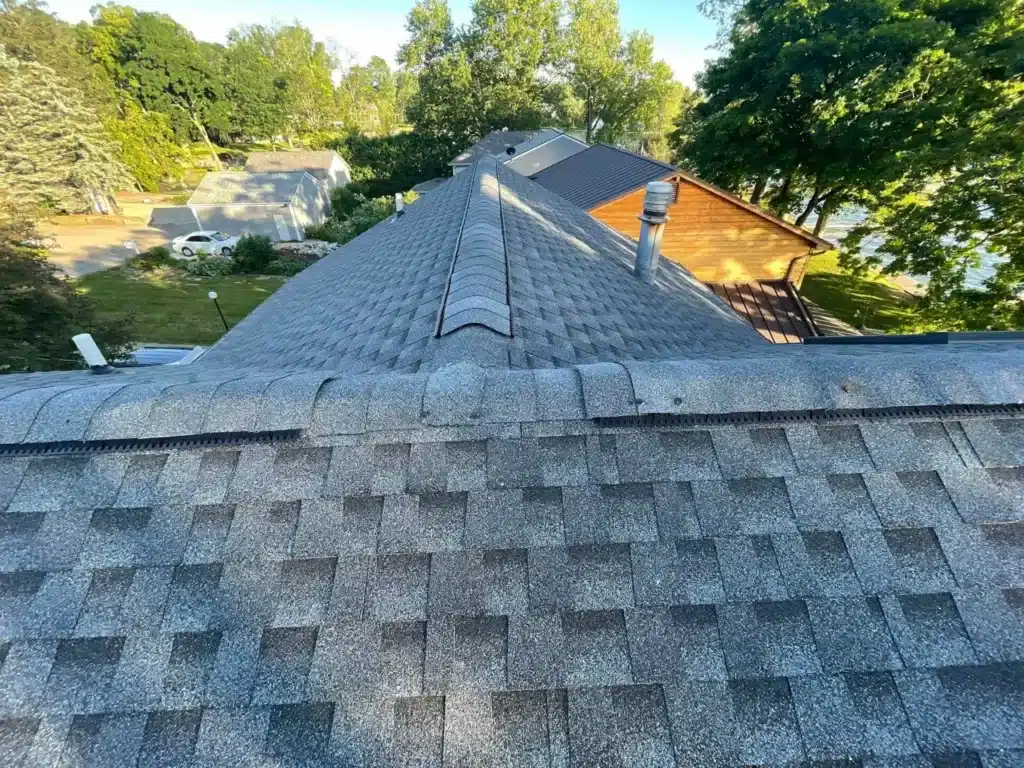
- We add hip and ridge cap shingles. These shingles are specially designed to provide a finished appearance, promote proper ventilation, and help protect your roof’s most vulnerable high points.
- We clean up the job site and conduct a final inspection. We remove all of the debris created during the project and conduct a final walkthrough to ensure the roof is safe and meets our standards.
The Metal Roof Installation Process
Metal roofs may not be quite as popular as shingle roofs, but they’re still seen on a number of homes and commercial properties in Ohio. They tend to be most popular with homeowners and property managers who prioritize durability and aren’t afraid to pay for it. Metal roof installation typically involves the following steps:
- Our crew arrives between 6:00 and 7:00 AM on the scheduled day (weather permitting). As with shingle roof installation, they may arrive later in the morning during the winter months to account for the later sunrise.
- We prepare the job site. Our crew will place protective tarps around your landscaping and exterior features to prevent any damage that may occur during the project.
- We remove the existing roofing materials. We’ll remove all of the existing shingles or metal panels, the underlayment, the drip edge, and the flashing. The roof decking is left in place unless any rot or damage is found. If damage is found, we’ll notify you and discuss your options.
- We install drip edge flashing along the roof eaves. Drip edge flashing protects the edge of the roof, helps guide water into the gutters, and creates a clean base for the waterproofing layers.
- We apply a waterproof ice and water shield to leak-prone areas. This includes places like the eaves (extending 2 to 3 feet beyond the exterior walls), valleys, and around chimneys, vents, and pipe boots.
- We cover the rest of the roof deck with synthetic underlayment. This moisture-resistant barrier is overlapped and securely fastened to protect your home or commercial building from rain, snow, and humidity.
- We install drip edge flashing at the rakes. Once the underlayment is in place, drip edge is added to the rake edges to protect against wind-driven rain.
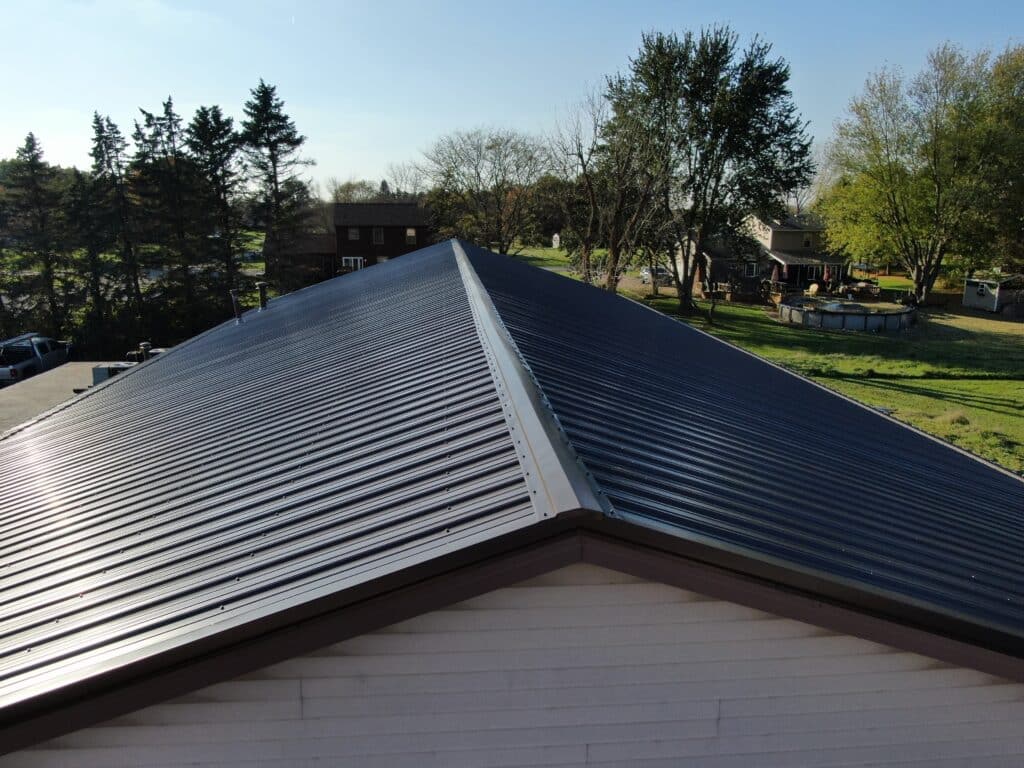
- We begin installing the new metal panels. Starting at the eaves, we’ll install metal roofing panels, carefully overlap the seams, and fasten them securely using screws or clips, depending on the panel type.
- We install flashing and trim around all roof transitions and features. This includes flashing around chimneys, roof-to-wall areas, and skylights, along with trim pieces to ensure a clean look and added water protection.
- We use pipe and zip boots to seal all roof penetrations. These components are installed around pipes and vents to create a tight, leak-resistant seal.
- We install the best ventilation system for the roof and attic. Common options include ridge vents, soffit vents, gable vents, turbine vents, and powered vents.
- We clean up the job site and conduct a final inspection. We’ll remove all the debris created by the project and complete a final walkthrough to ensure your property is safe and the installation meets our standards.
Full Shingle Replacement vs Layover Installation: What’s the Difference?
When it’s time to replace your roof, one of the biggest decisions you’ll face is whether to remove the existing shingles entirely (full shingle replacement) or install new ones directly over the old roof (layover installation).
While both options may seem similar from the street, they differ significantly in terms of quality, longevity, and long-term value.
For a full shingle replacement, we’ll need to tear off all of the existing roofing materials down to the roof decking. At this point, we can install new underlayment and shingles. This method allows roofers to inspect the underlying structure for rot, moisture damage, or soft spots that may have gone unnoticed. Full shingle replacement also ensures a clean foundation for the new roof and typically includes the installation of new flashing, drip edge, and ventilation components.
Because the roof is rebuilt from the decking up, this approach delivers better long-term performance, enhanced curb appeal, and full eligibility for manufacturer warranties.
Layover installation, on the other hand, leaves your existing shingles in place; a new layer of shingles is installed directly over the existing roof without removing the old ones. This option can save time and labor costs upfront, but it comes with trade-offs.
For example, layover installations add extra weight to your roof structure. They may also trap heat and moisture between layers and prevent our roofing experts from conducting a thorough inspection of the decking below. Layover installations may also void your warranty and make future repairs more difficult.
Additionally, modern building codes typically limit this method to one additional layer. In other words, you can’t just keep adding new shingle layers on your roof forever – it’s essentially a one-time option.
In most cases, a full shingle replacement is the more durable and recommended choice — especially if you plan to stay in your home or commercial facility for the long-term. It also helps boost the resale value of the property. A layover may be suitable for temporary solutions or limited budgets, but it’s important to understand the compromises involved.

Trust Asbury Roofing & Siding for Roof Installation in Ohio
Whether you choose to install shingles or metal panels, have your existing roofing materials torn off or have new shingles added on top of your existing roof, it is critical that you work with high-quality roofing professionals. This is the only way to ensure the final project will meet your expectations and that you’ll get the value you deserve.
Asbury Roofing & Siding is the perfect choice for homeowners and property managers in Ohio. We use only the finest materials available, and our crews have the training, skill, and expertise to carry out your installation project professionally.
Contact us today to discuss your options or schedule a free inspection.
Sources and References
- This Old House – “Metal Roofs 101: Installation & Material Types”
Describes the full installation process for metal roofing: materials selection, fastener types, panel layout, underlayment, flashing, and finish work.
https://www.thisoldhouse.com/roofing/21345689/metal-roofs - Wagler Steel – “How To Install Metal Roofing | What To Know & 10-Step Guide”
Step-by-step guide that covers preparation, types of panels, layout, underlayment, flashing, methods to overlap seams, and safety/quality considerations.
https://waglersteel.com/blog/how-to-install-metal-roofing/